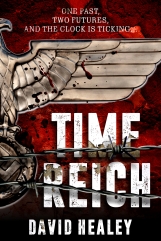
Time Reich gets closer …

In between things, I’ve been working on revisions to Time Reich. I’m calling this a novel of World War II and beyond, because it’s set in the past and the present. The story follows Professor Bram McCoy when he is enlisted by the Justice Department’s Office of Special Investigations to track down one of the last Nazi war criminals. He soon finds himself teamed up with OSI investigator Kate Crockett … in more ways than one.

I’m really excited about making TR available as an ebook. Briefly, it was available in print but I was never really happy with that version of the story, the publisher’s cover art, etc. I’m always grateful to editors and publishers for giving my writing a chance, but after much jumping through of hoops I was able to get the rights back and I’ve rewritten the story in a way I think is much more visceral and true to my original concept.

In the “old days” I would have carted around a paper manuscript to revise. Now, I’ve got it on my Kindle as an ebook. When I have time, I go through a chapter or two and make notes in my Mead spiral bound notebook. I might catch a typo, a word or bit of dialog that doesn’t ring true, or a scene that needs amping up. I’m always watching for what I call the “skip over” parts … stretches of writing that may be “pretty” in some way but that bog down the story. We’ve all encountered these in a book and I think our first reaction (unless we are particularly dutiful) is to skip ahead to the action. After making notes on the chapters in my Kindle, I go back and revise them on my trusty MacBook. It’s a long, slow process … yet the result is a good read. When I think of all the hours and revisions I’ve poured into TR, it’s a real labor of love. I can’t seem to put this story aside.

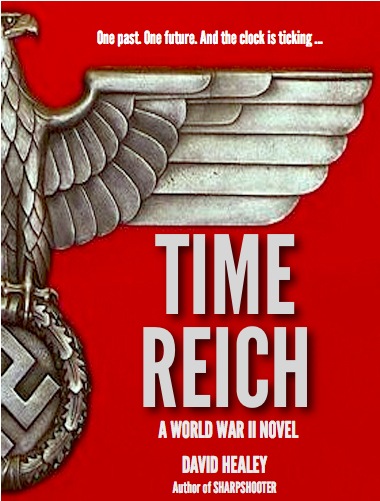
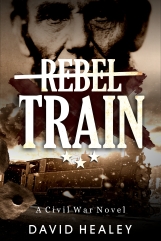
For the first time on this blog, I wanted to share the cover art. This is also being revised but it’s pretty close to the real deal at this point.

Posted in Writers & Writing | Tagged , , , | Leave a comment

Heroic light keepers of Chesapeake Bay

Image

Winter came down cold and hard across Chesapeake Bay in 1881. The previous summer had been one of the hottest on record, but anyone working on or around the bay that winter could only long for a bit of that heat. In February, an arctic chill settled across the mid-Atlantic. The fields and marshes froze iron hard. And yet there was a kind of beauty to the cold that seemed to scrub the air clean. At night, the stars glittered like bright gems in the clear sky.

For the two men assigned to the Sharps Island lighthouse near Tilghmann Island, it was cold and forlorn duty. They must have watched with trepidation as the ice surrounding their graceful lighthouse thickened and spread for as far as the eye could see, with an occasional streak of open water like a blue ribbon. Not a steamer, not a tugboat, not even the sail of a skipjack out oystering could be seen. They were utterly alone in a world gone icy and white. 

When the wind died down at night, they could hear troubling sounds. Contrary to what one might think, ice is far from silent. The great sheets shifted in the currents, creaking and groaning. It was as if the frigid darkness around them had come alive.

And then the worst happened in the early morning darkness of Feb. 10. Ice started to pile up against the spindly legs of the lighthouse. The men could feel the floor beneath them shudder from the pressure. The lighthouse began to list to one side like a ship that had taken on too much water. The two men had a boat and could have tried tried to make it to safety, but they would not abandon their post.

 Their screwpile lighthouse was lifted by the force of the ice, turned on its side, and carried away. For the daylight hours and then again into the night, the keepers clung to the wreckage. When they were finally rescued, the keepers managed to save the all-important lens that amplified the light. In an official report to Congress, their superiors in the Lighthouse Service praised the men for not abandoning their station:

 One instance of heroism is that of the keepers of Sharps Island light-house, in Chesapeake Bay. The structure was lifted from its foundation in February, 1881, thrown over on its side, and carried away by ice. The keeper and his assistant clung to the floating house, and, although one of their boats remained uninjured, they drifted in the bay 16 1/2 hours without fire or food, always in imminent danger, as the heavy floating ice often piled up against and threatened to swamp the house. It grounded, however, full of water, on an island shortly after midnight, at high tide. Satisfied that it would not float off again, soon the two keepers got ashore, and when the tide had fallen they returned, saved and took to the shore the lens, its pedestal, the oil, the library (much damaged by water), and even the empty oil cans, and then reported the facts through their inspector to the Board. … the two keepers who had spent those terrible hours afloat in Sharps Island light-house, and then saved its apparatus, were highly complimented by a letter direct from the Board itself …

While it is not part of the light-keeper’s duty as such to look after wrecks, or to succor the distressed, many acts of heroism have been performed by keepers of lighthouses. In those instances where, in doing so, they have endangered their own lives, they have received from the Secretary of the Treasury gold or silver medals in proportion to the danger incurred, not as compensation, but rather as marks of appreciation for their services.

From GREAT STORMS OF THE CHESAPEAKE: LEGENDARY HURRICANES, BLIZZARDS, FOGS AND FREEZES 

Posted in Delmarva History, Uncategorized | Leave a comment

Revision is the best part of writing

I think revision is the fun part of writing. Putting words down on a blank piece of paper or on a computer screen can be daunting, but going back and making the words you’ve already written better and stronger seems easier to me.

One of the revisions I’ve been working on lately is a novel called Time Reich.Frankly, I had a tough time swallowing the sci fi element of the story that I was talked into when workshopping this at the Stonecoast MFA pop fic group. But sometimes we have those Ah ha! or Eureka! moments that show us the way. After being given that gift of discovery, I’ve finally figured out how to make this story really click. The plot is now plausible in a way it wasn’t for me before. I’ve always loved the characters, the setting, the father-son and moral conflicts, the mix of past and present in this story. I’m still revising, but I’ve kept these parts that “worked” and discarded those that didn’t work.

Whenever I’m revising, I can’t help but think about James Michener’s method. The late author has somewhat fallen out of fashion, but it’s worth remembering that he wrote several blockbuster bestsellers, such as “Chesapeake.” He was very methodical in his approach to revision. Michener worked in “typewriter days” (he never made the switch to computers) and he said that once he typed out a page, it always remained page 284 or whatever in his manuscript. First, he would work his way through a chapter, marking places he thought needed more work with a circle symbol in the margin.

Then, as he revised, he would type out additions and past them to the end of the page. Sometimes that one manuscript page would get quite long. Keeping that one page also enabled him to see what changes he had made.

We’ve lost that ability in the computer era because once we delete a word or a sentence, we’ve relegated it to an electronic black hole. That’s too bad, because I think there’s value in being able to go back and see the changes we’ve made in a piece of writing.

That’s what revision is all about … going back and reading your writing again to see its strengths and where it needs to be improved. Where are you going off topic? Do you need to offer more explanation in places? Asking yourself these questions is all part of the revision process for any piece of writing. And in the back of my mind, I always think of Michener with his typewritten sheets unfolding like an accordion as he revises and revises …

Posted in Writers & Writing | Leave a comment

A Perilous Past, A Stormy Future

When it comes to predicting the future of storms on the Chesapeake Bay, one of the great question marks is climate change. In the pages of this book, there has been no shortage of gales, blizzards and hurricanes. Often, these storms have caused loss of life, untold human tragedy and suffering, and phenomenal property damage.

How could it possibly get worse? Climate change. The subtle, quite changes wrought by shifting weather patterns and ever-higher tides bring their own quiet fury. If sea levels rise as predicted and ocean waters grow warmer, the reach and intensity of future storms could have a devastating impact on the Chesapeake region.

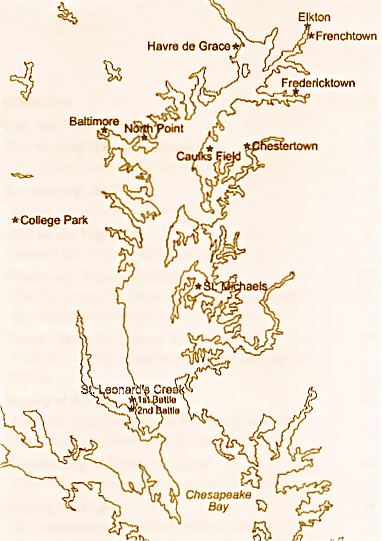
To understand this potentially stormy future, it helps to know something about the Chesapeake region’s geological past. At 200 miles long, Chesapeake Bay forms the largest estuary in the United States. At its narrowest point near Kent County, the bay is a mere 2.8 miles wide, yet its waters span 30 miles at the mouth of the Potomac. The bay drains more than 64,000 square miles from at least 150 rivers and streams that flow into it. The bay has 11,684 miles of shoreline. Those mere numbers don’t do its scope and scale true justice. Perhaps Captain John Smith came closest when he said of the Chesapeake, “This is a noble sea. Calm and hospitable, majestic in size. Its potential cannot be imagined.”

At the heart of the Chesapeake is a drowned river valley, flooded 10,000 years ago by the melting of the last great Ice Age. Though the massive sheets of ice never reached as far as Maryland, the melting of the glaciers to the north helped to create what we now know as the Susquehanna River.

To put things in perspective, it’s helpful to keep in mind that European settlement of the Chesapeake began 400 years ago—just a blip in the Chesapeake’s long history. And if one goes back even further, scientists say the Chesapeake really got its start 35,000 years ago when an asteroid struck the earth just about where Cape Charles is located today, creating an impact crater the size of Rhode Island and rolling out a tsunami that swamped the distant Blue Ridge mountains. In that one instant, the geologic fate of what would become the Chesapeake Bay was decided.

Asteroids, Ice Ages, and storms themselves are all far beyond human control and a reminder—however remote a possibility it may seem as one strolls along the beach on a fine day—that our human existence here may be more tenuous than ever we thought. It may be the ultimate act of hubris to believe that humans even matter in terms of environmental change or their lasting impact on the planet.

Posted in Delmarva History, Great Storms of the Chesapeake | Leave a comment

Brave and proud, young writers discover their voices

Being a writer and sharing your words with the world takes a certain amount of courage. Those of us who have been writing a while sometimes forget that. But I was reminded of that courage last weekend when I attended a local literary festival for young writers in elementary, middle and high schools. (In the spirit of full disclosure, I was there with my son, who was invited to attend the middle school workshop.)

The event was organized by the local chapter of the International Reading Association.

Parents tagged along for some of the sessions Saturday morning and I was most taken with the opportunity students had to share their work with one another.  They read a poem or a few paragraphs of their work to the rest of the group.

That took a lot of courage for a number of reasons, not the least of which was the fact that they were sharing in front of adults and other kids—most of whom were strangers. Or is it easier to share your work with people you don’t know?

I was really blown away by some of the writing. These kids could write! There was a poem about being alone but not lonely, a science fiction story with some promising world building, a love poem, and part of a story about Roman soldiers sent to battle Macedonians. Quite a mix of words and ideas from this young group.

Aside from the different writing styles, what struck me was the sheer courage to stand up in front of a group and read their work out loud. That’s hard enough for a grownup let alone for a 12 or 13 or 14 year old. I’m sure for many of the kids, this was the first time they had ever really and truly shared their words.

The adults were invited to chip in and offer a critique of the kids’ work (many of the kids did a good job of critiquing on their own), but mostly I was glad just to listen. The only time I did speak up was to congratulate them for having the courage to share their work. It was very brave, and for me, it was rather moving to watch these kids nervously find their voices and then sit back down with obvious looks of red-faced pride on their faces. Congratulations to them, and I hope it’s just the beginning of an exciting writer’s journey that will last a lifetime.

Posted in News and Events, Writers & Writing | Tagged , , | Leave a comment

Weather as character, weather as plot

Weather can help create a powerful setting for a story, whether it’s blazing heat or the bleak midwinter cold. Snow and ice sets a definite tone, as does summer sunshine or droopy humidity.

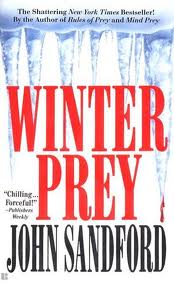
Some of my favorite books are the ones where weather goes beyond a backdrop and becomes a kind of character. One of the best examples of this in a popular or genre novel is “Winter Prey” by John Sandford. This police procedural featuring Lucas Davenport is set in mid-winter Minnesota. Brrrr. From the very first page, the weather sets a chilling scene in more ways than one:

“The wind whistled down the frozen run of Shasta Creek, between the blacker-than-black walls of pine. The thin naked swamp alders and slight new birches bent before it. Needle-point ice crystals rode it, like sandpaper grit, carving arabesque whorls in the drifting snow.”

I’ve been a fan of the Prey series since the early 1990s and now I enjoy Sandford’s newer Virgil Flowers series. For me, Winter Prey is the best of the bunch because of how effectively Sandford has written winter into the story. For someone from the mid-Atlantic (where “hard” winter tends to last a couple or three weeks at most) the frosty setting is exotic and fascinating.

Weather also makes a great setting in mystery novels such as “Iced” by Jenny Siler or “In the Bleak Midwinter” by Julia Spencer Fleming.

As I work on “Great Storms of the Chesapeake” I’m also struck by the ways in which weather influences real-life events. For example, I’ve been working on a chapter about the hurricane that struck the Chesapeake Bay region during the War of 1812. The British had just burned Washington to the ground after defeating the American militia in the devastating battle of Bladensburg.

Out of nowhere, a tremendous storm blew up. Here is the description from “A History of Maryland” published in 1879 as described by a British officer:

“The sky grew suddenly dark, and the most tremendous hurricane ever remembered by the oldest inhabitant in the place, came on. Of the prodigious force of the wind, it is impossible for you to form any conception. Roofs of houses were torn off by it, and whisked into the air like sheets of paper; while the rain which accompanied it, resembled the rushing of a mighty cataract, rather than the dropping of a shower. The darkness was as great as if the sun had long set, and the last remains of twilight had come on, occasionally relieved by flashes of vivid lightning streaming through it, which, together with the noise of the wind and the thunder, the crash of falling buildings, and the tearing of roofs as they were stript from the walls, produced the most appalling effect I ever have, and probably ever shall witness. This lasted for nearly two hours without intermission; during which time, many of the houses spared by us, were blown down, and thirty of our men, besides several of the inhabitants, buried beneath their ruins.”

Disheartened by the storm and the massing of American troops, the British returned to their ships on Chesapeake Bay. It’s just another example of how weather influences real events, not just the stuff of fiction.


Posted in Writers & Writing | Tagged , , , | Leave a comment

Gordan Korman’s Born to Rock is YA for guys

One of the comments I often hear from other moms and dads is how their son is a reluctant reader. I’d agree that it’s not easy for boys because so many of the newest YA and J Fic titles have to do with girls … who are usually vampires or madly in love with vampires. That’s all well and good, but it’s not exactly what a guy wants to read.

Here’s one book I like to recommend for younger guys … though adults might find themselves caught up in the pages as well.

Born to Rock by Gordon Korman:

Leo Caraway might be somebody we’d have trouble being friends with – he’s a clean-cut Young Republican who tinkers with a mock stock portfolio and brags about his early admission to Harvard. Then his world comes crashing down when he discovers that his dad is not his biological father … no, that turns out to be King Maggot, the world’s most famous and reviled punk rock icon of the ’80s.

When Leo surprises himself by taking a stand in school to stick up for an outcast kid against a bullying teacher, he loses his scholarship to Harvard and finds himself working as a roadie on King Maggot’s reunion tour. Let’s just say Leo learns more about life and ultimately himself than he would in the Ivy Leagues. Oh, and it turns out the Goth chick girl-next-door isn’t so bad after all … and neither is King Maggot.

Gordon Korman has a great premise here with a likable main character caught up in the sorts of outlandish situations a Young Republican wouldn’t expect. The story is peppered with one-liner wisecracks and poignant rock n’ roll moments. This is supposed to be a YA novel, but parents who lived the ‘80s will see themselves in the middle-aged characters and smile as they indulge in a bit of nostalgia.

Posted in Writers & Writing | Tagged , , | Leave a comment

Move over, Katniss—Solveig is in the fjord!

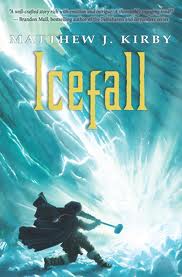
I’m always roaming the shelves hoping to discover a good new book, and the other day I picked one out just because it had a great cover. It turned out to be one of the best books I’ve read in years. Icefall by Matthew Kirby is set in a time and place that could be the distant past or a Viking-like fantasy realm with touches of Beowulf.

The story is told from the point of view of Solveig, the younger daughter of a Viking king. She and her pretty older sister, along with her brother (heir to the throne), have been sent into hiding for safety’s sake while her father wages war with a rival king. Solveig becomes the storyteller’s apprenctice and hones her skills in the great hall on the long, cold nights. As winter isolates them, tensions grow when food runs short and a sinister threat appears from the forest—and from a traitor in their midst. This is a story about friendship, courage, loyalty … and betrayal. It’s also a story about being true to oneself and one’s talents, for ultimately it is up to Solveig to lead them—not with a sword but with the power of her storyteller’s words.

A lot of boys don’t like to read books that have a girl as the main character, but guy readers will relate to the tomboyish Solveig along with the Viking warriors and battle scenes. I suspect that for marketing purposes this book was aimed at tweens and younger teens, but adults won’t be able to put it down.

Posted in Writers & Writing | Tagged , | Leave a comment

Bats in the attic and a body in the wall …

I’ve been working on the back cover copy for THE HOUSE THAT WENT DOWN WITH THE SHIP:

Delmarva Renovators has come to Chesapeake City on Maryland’s Eastern Shore to return the faded Captain Cosden house to its former glory for the latest installment of its home improvement show.

At first, the colorful houses and unique history of the old waterfront town on the Chesapeake and Delaware Canal seem like the perfect setting. But in addition to leaky pipes, bats and crumbling plaster, the cast and crew soon encounter more than what’s on their punch list when a mummified body tumbles out of a wall. The discovery unleashes a new series of killings as someone sets out to settle old grudges.

With the renovation project at a halt and the future of Delmarva Renovators in jeopardy, it’s up to the show’s producer and renovator extraordinaire Tom Martell to solve the long-ago murder and stop whoever is killing to revenge old wrongs.

Posted in Writers & Writing | Tagged , , , , | Leave a comment

USS Wisconsin is worth the trip to Norfolk!

I really enjoyed my recent trip to Norfolk, Va. What a lot of tunnels and bridges one has to cross to get there! What really caught my eye in town was the USS Wisconsin. The decommissioned battleship is now an extension of the amazing Nauticus museum and open for tours. I didn’t have much time before my talk, but I got to do a quick walk-through of the ship. (First, there’s a short film that gives a history of the ship. It’s well worth the six minutes.)

The ship itself is incredibly impressive when you stand on the bow and look back the length of the battleship. You’ll notice that the entire deck is covered in teak planks … glad it’s not my job to oil them!

Because the Wisconsin was at Iwo Jima and Okinawa, it brought back some memories of my grandfather, Frank, who also witnessed those battles. He served in the Navy aboard a cruiser, I believe it was the Leo. So I can only imagine he saw the Wisconsin in action all those years ago and may have listened to those massive guns firing.

The ship was used as recently as the Persian Gulf war, but it does seem “old” when one looks more closely. It’s certainly very bare bones even in terms of the officers’ quarters. There were a couple of vets there who had served aboard the ship, and I wish I’d had more time to chat with them. Maybe next time I’m in Norfolk!


Posted in Delmarva History, News and Events | Leave a comment