You know the poet, now meet Walt Whitman, sleuth

Speakers of the Dead by J. Aaron Sanders

speakersBy David Healey

(The following article appears in the March issue of The Big Thrill magazine.)

Before he wrote Leaves of Grass or became a famous poet, and long before he had a rest stop named after him on the New Jersey Turnpike, Walt Whitman was a newspaper reporter eager for a good story.

In SPEAKERS OF THE DEAD, debut author J. Aaron Sanders has imagined Whitman as a young man caught up in a story of life—and death—as he reports on the sordid world of body snatching while trying to exonerate a friend accused of murder.

The year is 1843 and the setting is New York City. Sanders, a professor of literature, has done impeccable research into this time and place. Much of what he describes in the pages of SPEAKERS OF THE DEAD is unsettling from our 21st century viewpoint.

It scarcely seems believable that the women at the Women’s Medical College of Manhattan were discouraged from practicing medicine and barred from voting. Justice in New York was often delivered frontier-style, at the end of a rope. Corruption was the norm. Newspaper reporters not only wrote articles, but set them in lead type and printed the papers themselves on hand-powered printing presses, thus earning the nickname “ink-stained wretches.”

All of this historical context smoothly woven into the pages makes reading this novel fascinating. It’s also fun to read about Whitman during a time before he achieved literary fame.

“I like to look for gaps when I’m writing historical fiction,” Sanders said. “How did he become the Whitman of Leaves of Grass?”

The plot focuses on events surrounding the medical college, founded by a couple who are Whitman’s close friends. The husband is apparently murdered by the wife after he allegedly has an affair with a younger woman. The wife is hanged for the crime. Whitman sets out to clear both of their names.

In the process, he delves into the world of grave robbing. At that time, medical schools needed cadavers for study purposes, but there was no legal way to obtain them.

“Grave robbery was a big deal then,” Sanders explained, noting that it was a lucrative criminal activity.

To research Whitman and the time period, Sanders read his original reporting for the New York Aurora, much of which is now available in online archives.

For all of his substantial output as a journalist, there is some evidence that Whitman was not the ideal employee.

“He went on long walks when he should have been writing for the newspaper,” Sanders said.

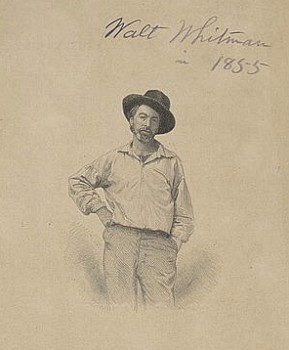
An 1855 image of Walt Whitman from Leaves of Grass. Courtesy Library of Congress.

An 1855 image of Walt Whitman from Leaves of Grass. Courtesy Library of Congress.

On those walks, he experienced the lush, sometimes unsavory life of New York, visiting bars and brothels and perhaps witnessing the great fire of 1835.

Several characters are taken directly from those newspaper pages, including grave robber Samuel Clement and Isaiah Rynders, an unsavory politician.

One of the issues of the time was immigration—which may strike a chord with Americans today. Hordes of immigrants arrived daily in New York, where they lived in poverty and were often taken advantage of due to their status.

There was also an air of desperation, despite the promise of America. Sanders noted: “There were not enough jobs for everyone.”

Another 19th century topic that Sanders approaches with compassion is Whitman’s homosexuality and relationship with Henry Saunders, another real-life journalist. Sanders richly imagines their tender relationship, though it had to be hidden from public view.

“I just thought of how he would be as a person who was romantically involved,” he said. He added that it’s interesting that while Whitman could not have been open about his sexuality at that time, he also did not have to make an issue of it.

“We’re way into labels now. While I think it was difficult to be a gay man in New York City in the 19th century, one thing Whitman didn’t have to do was announce that sexuality,” Sanders said.

Sanders teaches Whitman at Columbus State University, but he still manages to find time to write fiction.

“I’m a morning guy. I like to get up and write first thing in the morning. Everything goes better.” If he has a good morning writing session, he will sometimes go back to do small bits of writing throughout the day.

Where does he write?

“The place actually changes,” he said. Popular locales are his office, Starbucks, and currently his girlfriend’s living room, with her dog to keep him company. “Everywhere but my own house!”

He takes a unique approach to mapping out his stories. He begins with nine to 12 sheets of blank paper, taped together, to map out the story by jotting down scenes and bits of dialogue. He then carries these maps around with him to his various writing locales. As the story develops, he starts all over again with a fresh expanse of paper.

“I make several maps,” he said. “I like them as artifacts of the writing process.”

Sanders is already at work on a new novel, in which Walt will be working as a newspaper reporter in New Orleans. For research, Sanders will be wandering the historical district and turning to the newspaper articles that Whitman wrote about 19th century American life.

“He did such a good job in chronicling that century as a poet and as a newspaper reporter,” Sanders said, noting that Whitman was born in 1819 and died in 1892. “Whitman was there for much of the entire century.”

As for the Walt Whitman rest stop, situated between exits 4 and 3 on the New Jersey Turnpike, one can almost imagine Whitman sitting on the brick wall out front, watching the masses of travelers come and go.

“I think he would enjoy that,” Sanders said.

Speakers of the Dead by J. Aaron Sanders

Posted in Writers & Writing | Leave a comment

Giveaway wraps up … thanks to all!

Ardennes-Sniper-3D-BookCover-transparent_backgroundThe great Ardennes Sniper giveaway has come to an end! There were three separate giveaways going on at the International Thrillers website, Goodreads, and here at little ol’ HealeyInk.

I really, really, want to thank everyone who took the time to enter.

The books have been mailed to winners in South Carolina, Texas, Tennessee, Maryland, Georgia, and Ohio. I hope that the winners enjoy the books, and if they can spare the time, I hope that they will post a review at Amazon.com or Goodreads.

What’s amazing is that there were nearly 900 entrants to these giveaways. That number is really humbling. I wish that I could send everyone a book! However, just sending out these copies to winners gave my credit card a workout at the local post office, so mailing hundreds of copies just wasn’t in the budget.

However, there is still a way you can get a free book. If you submit your email to the sign-up form to the right of this post, you can request a free digital copy of one of several books. These can then be put on your Kindle or Nook device. Once on the email list, you will receive an occasional e-newsletter about new books and other happenings. (“Occasional” in this case means a couple of times a year.)

Also, you can read excerpts of other books right here at the website.

Thank you all, and now, back to work!

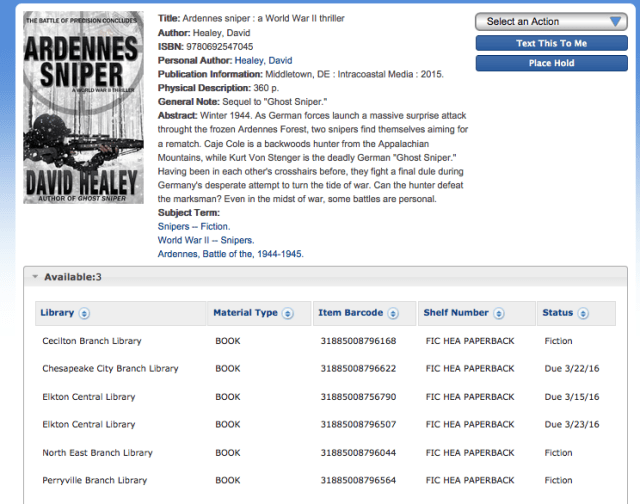
Ardennes Sniper is also available at your local library ... along with a lot of other great books!

Ardennes Sniper is also available at your local library … along with a lot of other great books!

Posted in Ardennes Sniper, News and Events | Tagged | Leave a comment

Winter’s last hurrah can bring March snowfalls

A car makes its way down a plowed road after the big snow of 1958. PHOTO COURTESY HISTORICAL SOCIETY OF CECIL COUNTY/GREAT STORMS OF THE CHESAPEAKE

A car makes its way down a plowed road after the big snow of 1958. PHOTO COURTESY HISTORICAL SOCIETY OF CECIL COUNTY/GREAT STORMS OF THE CHESAPEAKE

Winter struck late in 1958, and it almost seemed unfair, considering that the deep snow came in late March. It was an incredible snowfall, with measurements of 42 inches coming in from residents near the Susquehanna River in Maryland. The town of Elkton at the very top of the Chesapeake Bay was buried under 37.1 inches of wet, crushing snow. That measurement was taken by H. Wirt Bouchelle, who had been a postal carrier since 1908 and an official National Weather Service observer since 1927. Bouchelle had recorded 76 inches of snow that winter—though half the total had come from that single March storm.

The massive storm left communities in the upper Chesapeake Bay region without power for twelve hours. Power companies from neighboring states sent men to help, so that a crew of 186 linemen was working around the clock to restore electricity. It was noted that not even Hurricane Hazel four years before had caused so much damage. At Losten’s Dairy in Chesapeake City, the power was out for a week, and the dairy relied on a generator.

The deep snow proved dangerous and, in some cases, deadly. There was a close call at the Chesapeake Boat Co., where the marina owners had just been inspecting a boat shed that measured 95 feet by 136 feet, under which thirty boats were sheltered on the Elk River. Other than some creaking and groaning, there was no sign of any cause for concern. Ten minutes later, the two men were inside their office having coffee when a tremendous crash caused them both to leap to their feet. The entire shed under which they had just been walking had collapsed. Loss of the yachts and shed was estimated at nearly $300,000.

Others weren’t so fortunate. A farmer near the town of Rising Sun who ventured out to check on his barn, flattened by the great snow, died when he stepped back onto his front porch and the roof collapsed.

At Conowingo Dam, a young U.S. Navy WAVE was killed and three other military women were injured when their car careened out of control on the icy road and went through a guardrail. Their car fell ninety feet before landing at the base of the dam. The women had been returning to the Bainbridge Naval Training Center the night of the storm.

The snowfall of 1958 was truly one for the record books.

Posted in Delmarva History, Great Storms of the Chesapeake | Tagged , , , | Leave a comment

Irish rebels and World War I

I just wanted to share this review I put together of David Downing’s great WWI novel, One Man’s Flag. It is available at the local library as well. Great book with lots of history of this time period!

One Man’s Flag mixes love and war in the WWI era

February 24, 2016

One might wonder what World War I, Irish independence, India, and German communists have in common. Plenty, as it turns out, if you happen to be a journalist—or an agent of His Majesty’s government.

In One Man’s Flag, David Downing has painted an extraordinary tapestry of the early days of World War I. The year is 1916, well before the entry of the United States into the war. That doesn’t mean Americans aren’t interested in the events in Europe.

Assigned to cover these events is Caitlin Hanley, an Irish-American journalist. In the opening pages, she is awaiting the execution of her brother at the Tower of London for his role in blowing up bridges on behalf of Irish rebels. She is also torn about her recently ended love affair with Jack McColl, a British agent who helped catch those Irish rebels …


Posted in Writers & Writing | Leave a comment

Fascinated with the Writer’s Desk

You can tell a lot about a writer from where he or she works. Writers’ desks and offices always have fascinated me. The same goes for their work habits. I’ve read that Charles Dickens wrote in a chair in the corner while his busy family ran about, but he was so caught up in the world of his fiction that he rarely noticed. The noise was a good distraction, in a way, forcing him to focus on the story at hand.

I can understand that somewhat, having worked in newsrooms for many years with ringing phones, people coming and going, and maybe the TV news on. For reporters and editors, peace and quiet was a luxury they didn’t have, except late at night after the paper went to bed.

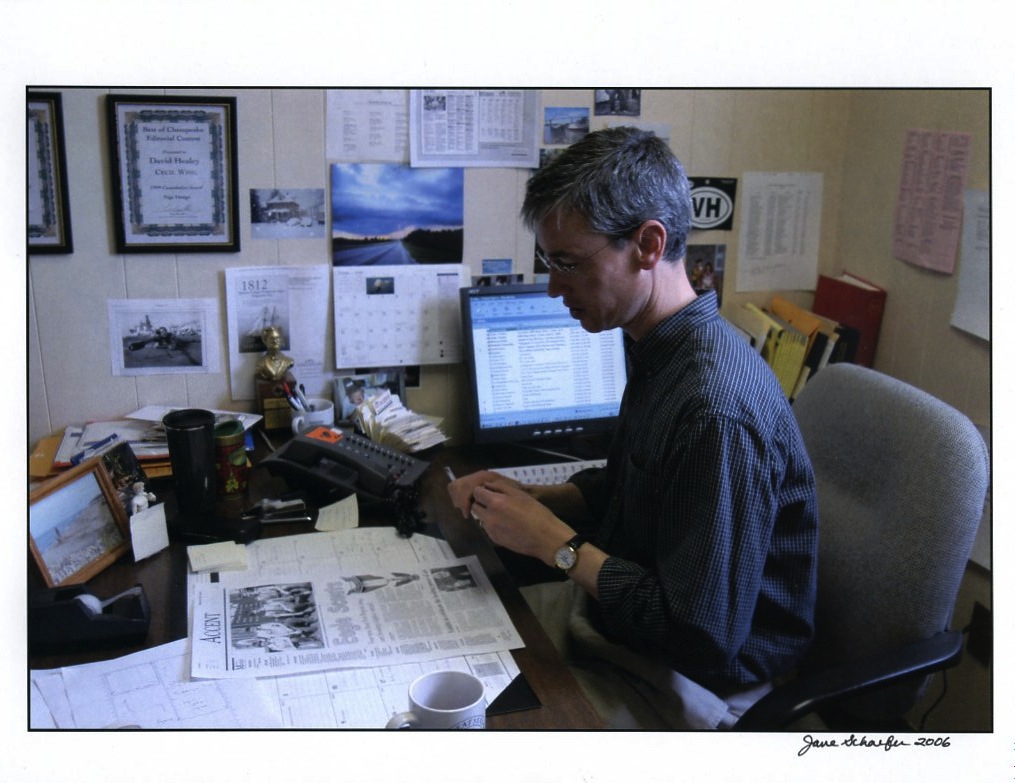
Photographer Jane Schaefer took this photo of me working at my desk at the newspaper back in 2006.

Similarly, there’s a rich tradition of writers working in cafes and coffeehouses. It worked for Ernest Hemingway in 1920s Paris and it worked for J.K. Rowling.

But back to writers’ desks and offices. One of my favorite books is a the photography collection “The Writer’s Desk” by Jill Krementz. I bought it back in 1996 at Borders Books and paid the princely sum (for a writer!) of $34.95 because I knew I had to have that book. I’m just fascinated by how and where writers work. It seems very mysterious to me, and here’s this wonderful book that has captured these desks on its pages.

Over the years since then, I’ve enjoyed going back and admiring the wonderful black and white photos of writers at work in their workspaces. Krementz took the photos as far back as the 1970s and sadly many of those great writers are no longer with us.

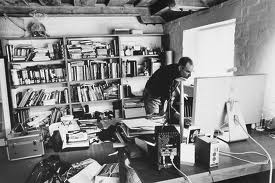
The photo that appeared in TIME magazine of Steve Jobs and his office.

Time Magazine recently had a wonderful black and white photo of Steve Jobs at work in his home office. It was far more modest than one might expect, which leads me to believe a creative space has more to do with having a simple place to work privately and think freely than it does with matching furniture and a good view.

For my own desk, I’m very lucky to have a big, sturdy table I bought years ago at a yard sale. The stamp on the bottom says it’s from the 1950s and it seems to be made of oak. It has a couple of drawers for paper clips and Post-It Notes. The desk is just the right size for piling high with books and computers, including my trusty 1992 PowerBook and new MacBook. I keep lots of pens and scrap paper handy for jotting notes. There’s a whiteboard on the wall to help remember the really important stuff, like deadline dates.

Crave of the Day: Turn your desk into a standing desk!

My desk is a tad high for typing, so I recently added a slide out keyboard tray that I built myself using plans I found online that involve drawer rollers and a stair step. It’s a perfect height and makes typing for long stretches much for comfortable, plus it’s a nice extra space for notes and mugs of tea.

That desk is a refuge of sorts. I feel serious when I sit down there. “Hey,” my mind seems to say. “You’re at your desk. Time to get writing!” It’s not perfect, and not terribly photogenic, but it works for me.


Posted in Writers & Writing | Tagged , , , | Leave a comment

The blizzard of 1899 remembered

It looks as if this is going to be a largely snow-free winter. Dipping into Great Storms of the Chesapeake, I thought I would cool things down with a lead in to the storm that buried the Chesapeake Bay region more than a century ago. Best enjoyed with a cup of hot cocoa in hand!

• • •

With roads clogged, a horse remained a good form of transportation during the blizzard of 1899. COURTESY HISTORICAL SOCIETY OF CECIL COUNTY.

1899. William McKinley was president. He would be the last Civil War veteran to serve in the White House. The Spanish-American War had just ended, and at least one Marylander, John A. Kay from the quiet Cecil County town of Rising Sun, was among the 250 men who died in the explosion aboard the USS Maine. Teddy Roosevelt and his Rough Riders had exacted revenge. It was the year the paper clip was invented and the Bronx Zoo opened. The first automobile fatality in the world occurred. The historian Bruce Catton was born, as were dancer Fred Astaire and writer Vladimir Nabokov. In Baltimore, a young reporter named H.L. Mencken was just getting started in the newspaper business. He would soon find himself trekking through huge snowdrifts to work on his first story.

Everywhere one looked, there was a Maryland that was racing toward the modern age and that seemed to be bursting at the seams to enter the 20th century. And yet, there was much about the Chesapeake Bay region we take for granted today that was still far in the future in 1899. It was true that Marylanders had one foot in the new century, the the other foot was very much in the 19th.

First and foremost was the fact that the age of the automobile had not yet arrived. Traveling to another town meant hitching up the horse and buggy, or else walking. At the same time, the railroad system was highly developed. Tracks reached to almost every town of consequence. Since the 1860s, for instance, the residents of the town of North East on the upper Chesapeake Bay could catch one of several trains that ran each day to Baltimore and Philadelphia. Train service was fast and reliable, not to mention affordable, and these trains gave Marylanders a great deal of mobility and prosperity.

The other important mode of transportation, especially for those who lived around the Chesapeake Bay, remained the steamship. It was still the Age of Steam, and travelers depended on services such as the Ericcson Steamship Line. Traveling around the bay was fast and efficient by steamship, considering that the Chesapeake Bay Bridge wouldn’t be built for another 50 years.

Communication was almost as instantaneous as it is today. Telegraph lines stretched to the smallest villages. Alexander Graham Bell had received a patent for the telephone in 1876, and telephones were already beginning to arrive in middle class homes.

As they had since colonial times, the people of Chesapeake Bay continued to make their living off the water. And in 1899, that meant oystering. The supply of oysters still seemed endless, and thousands of men worked to pluck as many as possible from the bay’s great oyster reefs. The harvested oysters were canned or shipped fresh by train to Philadelphia and New York. These oystermen, so desperate to make as much as they could during the short oystering season, would suffer terribly during the storm. Several others would be lost in the blizzard.

While the month had started with seasonable temperatures of 27 degrees Feb. 5-7, the weather had turned viciously cold when a great arctic air mass rolled down and hovered over the mid-Atlantic. In the days before the storm, the temperatures almost seem unreal today: Charlotte Hall hit minus 19. Fallston in Harford County was minus 14. Out in Carroll County, the temperature fell to minus 23 degrees. On Feb. 10 the thermometer dipped to minus 10 in downtown Baltimore. That was the air temperature … what the wind chill must have felt like is chilling, indeed. It goes without saying that the ground froze solid, as did much of the Chesapeake Bay. In temperatures that savage, keeping warm and covered up became a matter of survival for so many of the men and women forced to work outdoors or on the water.

In Ocean City, the surf froze on the beach and left the life-saving station there stranded and its crew under “great personal privation.” The Susquehanna River ice was 14 inches thick at Havre de Grace. The Potomac froze over. Tangier and Pocomoke sounds were closed to vessels. Chesapeake Bay froze all the way to its northernmost reaches.

The cold would have been bad enough. But then came the snow.

Posted in Delmarva History | Tagged , , | 3 Comments

Rename Elkton’s Main Street ‘Cannonball Run’

This is the musketball I found in the back yard, along with a reproduction War of 1812 coin I found on ebay.

This is the musketball I found in the back yard, along with a reproduction War of 1812 coin I found on ebay.

Here is a newspaper column from 1998. Over 21 years I literally wrote hundreds of editorials and columns. Every now and then I would like to dust off one of the columns that touches on history or local flavor and share it again.

How much to mail a cannonball?

The way cannonballs keep turning up in Elkton, you might think they were as commonplace as rocks.

Seems like you can hardly dig anywhere without finding one of these iron missiles from the Revolutionary War or War of 1812 or even the Civil War.

The recent, rekindled interest in cannonballs started back in April, when a 15-pound cannonball turned up from the depths of Elkton’s Main Street. It was dug up during work for the town’s Streetscape project.

After the media coverage of that discovery, it began not raining but pouring cannonballs. People came forward to describe their cannonball finds over the years, and the list of people in the county who possessed a cannonball grew by leaps and bounds. According to the Cecil County Historical Society, which tracks such things as cannonball discoveries, the list of cannonballs found around Elkton now stands at more than 20.

At least 10 of those cannonballs are in private hands. The rest are in possession of the historical society and Historic Elk Landing (which has two found at the site of the War of 1812 fight). The Elkton town administrator has the one found recently on Main Street.

Over the years, several of the cannonballs were found near the intersection of Main and Bow streets. Others were found during the construction of Union Hospital in the 1970s. Individual cannonballs have popped up on North Street near the old firehouse and up on Red Hill.

Oddly enough, considering how many cannonballs keep turning up, there was never a major battle fought in Cecil County. There were skirmishes between British and American troops in both the Revolution and 1812, but never any Civil War action.

Experts say it’s likely cannonballs fell off wagons or were left behind by Redcoats or American forces camping in Elkton during the Revolutionary War. Maybe a soldier used one to weight down a corner of his tent and left it behind.

Elkton isn’t the only town in the county with cannonballs. In Charlestown in the 1800s, it was necessary to make a public ordinance banning the rolling of cannonballs in the streets. Evidently, bowling in the street using cannonballs had become something of a pastime and a public nuisance.

I’ve never found a cannonball but I did discover a lead musketball while digging in my garden in Chesapeake City. Don’t ask me how it got there, but it’s .58-caliber – exactly the kind of musketball used in the Federal army’s Springfield rifles during the Civil War. Maybe I’ll find a cannonball if I just dig a little deeper.

In the end, these cannonballs don’t have much monetary value, although it’s nice to have your very own chunk of history. On the Internet trading site eBay, Civil War cannonballs sell for anywhere from $20 to $65 and the bidding isn’t exactly hot. There’s one obvious drawback, too, pointed out by one seller of a 6-pound cannonball: “Buyer pays shipping. Good luck.”

Posted in Delmarva History | Tagged | Leave a comment

How legend says Delaware’s Whorekill, Murderkill, and Slaughter Beach got their names

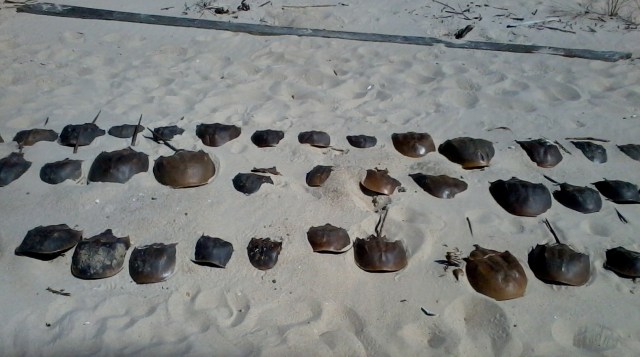
Did the demise of horseshoe crabs like these help give Delaware's Slaughter Beach its peculiar name?

Did the demise of horseshoe crabs like these help give Delaware’s Slaughter Beach its peculiar name?

The bloody history behind the names

by David Healey

There’s nothing like a day at the beach. Pack the sunscreen and some sandwiches, load the kids in the car, and head down Route 1 for the Delaware shore. For visitors from points north, the closest beach can be found in the quaint town of Lewes and especially the state park at Cape Henlopen.

At first glance, these are picture-perfect beach destinations straight out of a tourism brochure. What the brochure surely fails to mention is the resort town’s violent and bloody origins, and its rather unsavory original name Whorekill.

Your first clue to some unsettling business from the past might very well have been some other place names you noticed on the trip down Route 1. In the vicinity of Killens Pond State Park south of Dover, you might have seen that you were crossing the Murderkill River … just up the road from Slaughter Beach.

Whorekill, Muderkill, Slaughter Beach?   Yes, the legends behind these Delaware place names are pretty much the ones that your imagination just provided. Maybe even worse.

The origins of place names sometimes present a puzzle. Names get passed down generation after generation, but not always the reasons for them. But do a little digging, and the origins usually come to light, although there is sometimes a bit of guesswork and deduction mixed in when trying to figure out what was on the minds of European settlers from the 1600s.

Crave of the Day: Shipwreck Maps!

One of the most sinister names —Slaughter Beach—is hardly appropriate for the friendly community there. That is, unless you happen to be a horseshoe crab. Local legend says the name may stem from the annual springtime appearance of hordes of horseshoe crabs that emerge from the waters of Delaware Bay to lay their eggs on the beach. Changing tides leave many crabs stranded, so that they fall victim to the beating sun or marauding foxes and raccoons. Hence the name “Slaughter Beach.” (There is a less gruesome theory behind this interesting place name, which is that it comes from William Slaughter, a local postmaster who lived at the beach in the mid 1800s.)

The legends behind the Murderkill River and Whorekill are far bloodier. Don’t be entirely reassured by the fact that “kill” is a Dutch word for “river” or “creek.” The Dutch were the original settlers of much of what is now Delaware, Pennsylvania and New York, so that it’s not that unusual to find rivers bearing the name “kill.” The Schuylkill near Philadelphia is probably one the best known examples, although it roughly translates from the original Dutch as “Hidden River,” probably due to the dense vegetation along its banks when it was first mapped in the 1600s.

The origins of the name Whorekill are murkier. Dutch explorers first arrived at what is now Lewes in 1629 and purchased land from the Siconese Indians who lived there. Long before it was dredged to create the Lewes-Rehoboth Canal, the river there was named Hoerekill in Dutch. The Dutch word “hoere” means whore (hoeren in the plural). In other words, Harlot’s River.

Considering that a Dutchman’s hoere was an Englishman’s whore, how did the river get this rather X-rated name? Historians say it apparently has to do something with the tradition of Siconese men sharing their women as a gesture of friendship to the Dutch. Your average Dutchan probably thought this was a fine way to celebrate their purchase of the Indians’ land and a memorable place name, but the hoeren in question soon led to a cultural misunderstanding and massacre.

In 1631, the Dutch left behind settlers to establish a whaling colony on the Hoerekill. Sometime that year, perhaps in a dispute over the Dutch treatment of the women they had shared, Siconese warriors descended on the settlers and killed them all. Considering that the Siconese were considered to be very peaceful, it does seem likely that they were provoked.

The Dutch were appalled at the massacre, and it would be many years before the settlement on the Hoerekill was reestablished. And when the Dutch returned, they would have their revenge, an incident that would lead to another brutal place name.

According to “Names on the Land A Historical Account of Place names in the United States,” here is how the Murderkill got its name … remembering how they had been served at the Whore-Kill, they went some ten or twelve miles higher, where they landed again and traded with the Indians, trusting the Indians to come onto their stores ashore, and likewise aboard their sloop drinking and debauching with the Indians until there were at last barbarously murdered, and so that place was christened with their blood and to this day is called the Murder-Kill, that is, Murderer’s Creek.”

As for Whorekill, the village there continued to be called by that name until 1682, when William Penn assumed ownership of the region and redesignated it with the more puritan name of Lewes, after the English town in East Sussex. All these years later, the name Lewes still sounds better in the tourism brochures, but its bloody past hasn’t been entirely forgotten.

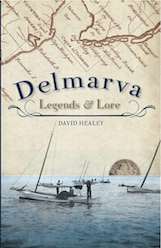
—From Delmarva Legends & Lore, The History Press, 2010


Posted in Delmarva History | Tagged , , | 13 Comments

Civil War returning to the Big Screen

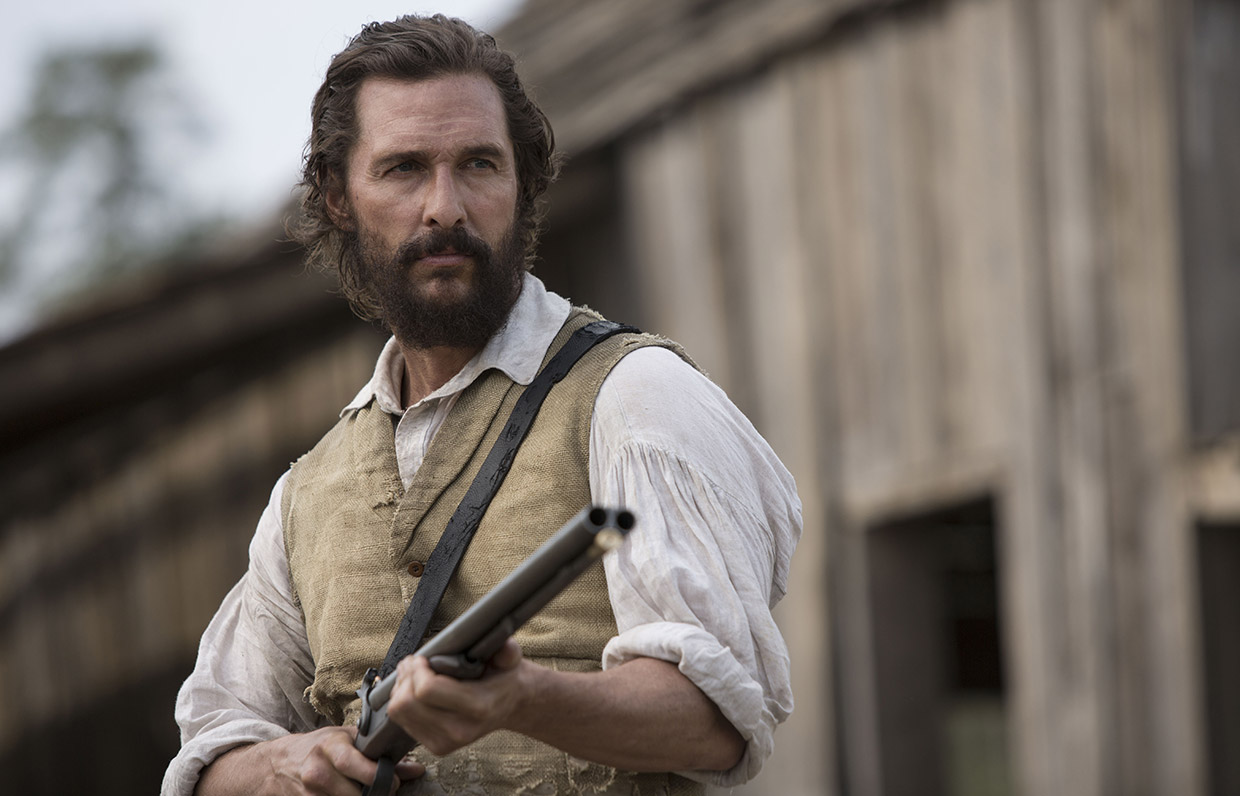
Free State

Double-barreled shotgun, circa 1864. Photo courtesy STP Entertainment.

The upcoming film Free State of Jones is based on a true story of a rebellion within a rebellion, telling the tale of a former Confederate soldier who leads a small faction against the Confederate government to declare independence in his corner of Mississippi. In the trailer, it appears that Jones leads a force made up in large part by former enslaved Americans and disenchanted Confederate veterans.

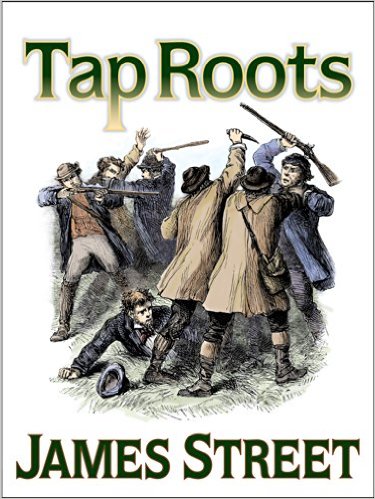
Tap RootsWhile the film itself seems to be based on a screenplay rather than a novel, the story of the rebellious Newton Knight is told in Tap Roots, a 525-page doorstopper written in the 1940s by James H. Street, a Mississippi native and journalist for the Associated Press and the author of several popular novels about the Civil War era set in the South. Street died all too young at the age of 50, but he had an impressive literary output. All of his books, fortunately, are now available as ebooks. I plan on adding Tap Roots to my Kindle soon.


The upcoming movie also puts me in mind of the classic William Styron novel, The Confessions of Nat Turner. Again based on a true story, Styron imagined the life of Nat Turner and the real-life rebellion that he led in the 1840s.

The trailer reminds me a lot of a film set during another Revolution, The Patriot, starring Mel Gibson. Any good thriller needs a good villain, and The Patriot demonized British forces, much as The Free State of Jones appears to turn the Confederates into villains.

Of course, any Civil War movie will be popular with us history buffs, and I hope to be one of the first in line to buy tickets to see The Free State of Jones when it hits theaters in May.

Posted in Writers & Writing | Leave a comment

Meet the legendary duelist Quentin Knox

coverThe Duelist is a story that I’ve had in my head for a long time, and was finally able to write late last year. The inspiration for the main character and the events described come from local legend. It seems incredible today, but there was a time when duels were fought for a variety of reasons (were any of them really good reasons?) and there were “serial duelists” who killed several opponents over the years. Quentin Knox is a combination of one of these duelists and a legendary local Revolutionary War hero who supposedly became so fond of war that he went on to become one of Napoleon’s officers.

Some of the research here comes from an earlier nonfiction book called Delmarva Legends & Lore. The weapon of choice for duelists in 19th century Americans was the dueling pistol, but the idea of a duelist who preferred a sword was intriguing. Quentin Knox is not an entirely good or likable person, not even to himself, but he does have a sense of humor and skill with a sword:

Revolutionary War hero turned soldier of fortune Major Quentin Knox returns from Europe’s Napoleonic Wars broken in spirit and impoverished. A deadly duelist and fearless soldier, he has seen and done things of which he is not proud. With his last coins, he buys passage to the Chesapeake Bay Tidewater country that he remembers from his youth. But instead of peace, he finds his skills as a swordsman called upon once again to teach a teenager from the local gentry the art of the sword in preparation for a duel that he is being forced into fighting. Knox soon engages in the most challenging swordplay of his life as he enters a dangerous game to keep two young friends from killing one another in a duel. And in a final act of violence, he may finally find his own redemption.

The Duelist is a bit more than 13,000 words long, or around 50 printed pages, so calling it a novella made more sense (I thought) than calling it a short story. This novella has three parts, rather than chapters. For a while, I wondered if I could add scenes and characters to make it into more of a novel length. However, some stories are as long as they need to be, and I think that’s the case here.

After reading it, you may agree that settling differences with a duel wasn’t such a good arrangement, particularly if Quentin Knox was your adversary!

Posted in Delmarva History, Writers & Writing | 1 Comment