Chaney Scholar Explains 1812: Our Forgotten War With Britain

Chaney Scholar Explains 1812: Our Forgotten War With Britain

By Alex Walls, Staff Writer

Published: April 5, 2011 at 12:10 am

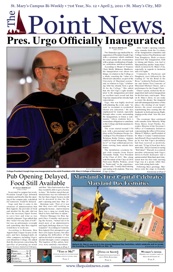
This past week, the Center for the Study of Democracy welcomed this year’s Chaney Visiting Scholar, David Healey, who came to discuss the U.S.’s forgotten war — the War of 1812. The lecture, entitled 1812 in the Maryland Imagination: A Star-Spangled Exploration, gave those present an insight into a part of Maryland history on the eve of the bicentennial of the declaration of war.

The beginning of the talk dealt with French Emperor Napoleon Bonaparte. During the opening years of the 1800s, Bonaparte had plunged Europe into a “world war.” At the same time, relations with Britain and the United States become even more frigid. The British did not recognize the U.S. as a sovereign nation and the Royal Navy kidnapped many U.S. sailors, forcing them to serve on British ships. The British were also funding a “cold war” between the western settlers and the Native Americans.

On June 18, 1812, Congress, on the recommendation of President James Madison, declared war on Great Britain. Madison would be the only President to actually lead troops in battle. However, the war went just as well as the Battle of Bladensburg, also known as the “Bladensburg Races” due to the fact that the American militia raced out of the way as the British marched on Washington.

The problem that faced the U.S. was that it picked the wrong enemy. According to Healey, “after the fall of France, Britain became the world’s first superpower which had the strongest navy and military [in the world].” When peace broke out in Europe, Britain was able to turn its attention to the U.S. front.

The United States was not ready to fight a war since it had virtually no army nor a navy to defend itself. In order to protect the Chesapeake, Joshua Barney built barges that were fast and could attack the Royal Navy’s ships and then hide in the marshes. However, these small boats were no match against the Royal Navy’s “First Rate” ship of the line, “which took 6,000 trees to build, 800 souls to man, and 30 pound guns on several decks,” said Healey.

“By 1813, the British had the Chesapeake Bay locked up more than the King’s bathtub,” joked Healey. However, this was no laughing matter at the time. Under the leadership of Admiral Sir Cockburn, the Royal Marines became the terror of Marylanders. As veterans of the Napoleonic wars, they destroyed most of the resistance of the American militias.  The militias were so bad that “fighting on land, sailors were the best trained soldiers,” said Healey as he described the major disadvantages the Marylanders were facing.

Healey then described several battles, including the defense of Elkton, one of the few victories for the U.S., the burning of Havre de Grace, which galvanized Marylanders against the British, and the well-known Battle of Baltimore and the defense of Fort McHenry.

Healey also mentioned the Legend of Kitty Knight. During the burning of Georgetown (Cecil County, MD) and after the rest of the town fled to the woods, Kitty Knight resisted the British soldiers and protected several older houses within the town. For her bravery, most of the older part of town was saved.

 

Posted in In the News | Leave a comment

Create your own ‘Writer’s Stay-cation’


Here I am at one of my favorite bookstores, Washington Street Books and Antiques in Havre de Grace.

As a writer, what interests me more and more these days is the creative process. Where do our stories come from, and how do we put them into words?Let’s face it, being a writer requires more than a little inspiration. Even professional writers need a healthy dose of the I-word now and then to keep their creativity on track.   When it comes to success, we know all about that 99 percent of perspiration. It’s the 1 percent of inspiration that needs constant renewing.

These days, in these times, it’s not always easy to find the hours off or the money for workshops, conferences or graduate programs that are the best source of inspiration for writers. Yet there are other ways of getting the creative juices flowing.

Inspiration doesn’t have to cost much and you won’t have to go farther than your favorite chair — or maybe your library or your bookstore. To give your creative writing a jolt, you just need to be, well, creative.

What you need is a “Writer’s Stay-cation.”

Can’t afford that writer’s workshop in Maui? Then set aside a weekend, a day—or even a single afternoon—for the writer’s version of the “stay-cation.” Call in sick, get mom or the hubby to take the kids off your hands, and whatever you do, for God’s sake stay away from Facebook!

And don’t forget snacks.  Snacks are very important! Hungry people can’t be expected to think straight. Get a pot of coffee or tea going while you’re at it. Caffeine clears the mind.

Use this hard-won time to reconnect with your reasons for writing. How? Follow this three-step process. Let’s get started …

Read. I know, I know. You’re supposed to be writing! But this writer’s stay-cation is about inspiration, not production. So head to your bookshelves, or the ones at the library.

I’ve recently heard this called “booking,” and it’s something I’ve been doing for years. Here’s how it works. We all have shelves filled with our favorite books. We saved them for a reason, but we don’t always have time to revisit them. In booking, you make time. First, pour coffee. Then poke around your bookshelves. Take down that volume of poetry or that mystery novel, and “dip” into it. No, that doesn’t mean reading the whole book from the very first page. No time for that! But revisit that scene you loved, or that bit of description, or just flip open the book and start reading at any point. You’ll soon remember why you saved this book, and why it’s so easy to get reacquainted, as if with an old friend.

Think. I don’t know about you, but I always seem to think best when my hands (or feet) are busy doing something else. Ideas like to simmer, like soup on the back burner. So go for a run or walk, stain the deck, weed the garden, fish, bake cookies. Do something that is the opposite of mentally stimulating. But don’t spend that time plugged into an iPod or strategizing your next shopping trip to Wal-Mart or worrying about how you’re going to get your daughter to eat broccoli. Think about your novel, your poem … the story you want to tell. In other words, give your hands and/or feet something to do, and your brain tends to do a good job of simmering all on its own.

Write. You’ve been reading. You’ve been thinking. It’s all good. Now get out a pen and paper—not your MacBook, lovely machine that it is—and write something. Come up with 10 first lines for a short story/novel/memoir. Write a rhyming couplet in iambic pentameter. Sketch a character. Write down your thoughts on your son’s birth or your first kiss. What did the joy of holding little Joey that first time feel like? How did Susie Hunter’s lips taste? Describe that experience as best you can.

Congratulations. You are putting words on paper. You are writing. It’s not always easy, but sometimes the hardest part is simply getting started, and that’s what an inspirational “Writer’s Stay-cation” is all about.


Posted in Writers & Writing | Tagged , , | 2 Comments