Excerpt from Great Storms of the Chesapeake about the ‘Hurry Cane of 1667’

“There Was Nothing that Could Stand Its Fury” — From GREAT STORMS OF THE CHESAPEAKE (History Press 2012)

One of the first major storms to impact early settlers around Chesapeake Bay was the Great Hurry Cane of 1667. No weather records or official observations existed at that time. But from the descriptions that survive to this day, there is little doubt that this was one of the Chesapeake’s worst storms, historically speaking.

Early on the morning of September 5, 1667, the red ball of the sun rose on a hazy horizon. Those going about their morning chores may have hoped for a breath of wind to stir the morning air. It had been unusually hot in the Chesapeake, as the newly settled region was called.

The Chesapeake regions of Maryland and Virginia are defined as subtropical climates with humid summers and relatively short winters—albeit winters that can have weeks of intense cold. This was a steamy region, indeed, in comparison to the damp, gray, chill weather of England. Summer heat began early and stretched deep into September or even October. The humid air could get so thick that you could almost feel it weigh on your shoulders, making every chore that much more difficult.

The climate and the living conditions could be hard on newly arrived settlers, who still came decades after the Ark and the Dove first landed at St. Mary’s City in March 1634. Lord Baltimore’s colony had expanded greatly since then, but living conditions had not improved much.

Newcomers often went through an adjustment called “seasoning.” The new arrivals’ immune systems were adapted to European climates and illnesses. Settlers almost always fell ill from a combination of the new diseases inherent to the Chesapeake, particularly fevers of one sort or another. Those who survived might later fall victim to recurring malaria or what writers of the time called “grypes of the gutt”—basically sickness caused by spoiled food or contaminated water.

Then there was the heat and humidity and allergies to new forms of pollen, plus a sparse diet that left the new settlers weak. Some did not survive this seasoning, and those who did were not always robust. Few men lived beyond their forties, and an amazing seven out of ten immigrants died before reaching age fifty. Women fared no better, with childbirth and burns from cooking fires being the leading causes of death. In the Chesapeake, orphans were far more common than children with one or two surviving parents. Writing inMaryland: A Middle Temperament, historian Robert J. Brugger notes that just 6 percent of fathers in the Chesapeake lived to see their children grow up. Harsh conditions, to be sure, but ones that newcomers were willing to endure for the opportunities offered by the New World.

Extreme weather of one kind of another did little to lessen the misery of the Chesapeake’s early European inhabitants. The hot summers and cold winters likely only hastened the deaths of settlers already in a weakened condition.

It is perhaps a testimony to this hard life that so few of the Chesapeake region’s early houses survive. Most were of post-and-beam construction that has long since rotted away. Another century would pass before the substantial brick homes of the Tidewater gentry appeared. Chesapeake houses of the 1600s were practical and transient. “The dwellings are so wretchedly constructed that if you are not so close to the fire as almost to burn yourself, you cannot keep warm, for the wind blows through them everywhere,” noted one early traveler.

This was the setting that the sun rose upon that morning before the storm nearly four hundred years ago. The settlers must have noticed the sunrise in passing, and a few old sailors may have grumbled about how a red sky at dawn was a portent of foul weather to come, but for the most part everyone in those hardworking days had more immediate concerns. Water had to be hauled, cattle had to be brought to pastures for grazing and firewood needed splitting.

Except for the very wealthy—of whom there were few in the Chesapeake—the simple labor of living was constant. Life wasn’t easy, but the settlers were well aware that it could be worse. At least there was peace with the Nanticokes and the Susquehannocks, although wary Marylanders kept an eye on the settlers from the Virginia colony, who were constant rivals and no friends of Maryland’s largely Catholic population. Settlers in the Chesapeake did not have to contend with wolves, bears or other dangerous predators, aside from the occasional fox in the henhouse.

The storm blew up quickly, with little warning. From the descriptions of the event and the autumn timing, it was almost certainly a hurricane. There was little or no understanding of the nature of storms in that era. The hurricane ravaged the Chesapeake Bay region and its hardscrabble settlers. “A mighty wind destroyed four-fifths of our tobacco and corn and blew down in two hours fifteen thousand houses in Virginia and Maryland,” noted one account.


According to weather historians, this was one of the worst storms ever to reach our shores then or now, and its impact was felt across the Chesapeake region at a time when the struggling population was especially vulnerable.

According to the National Oceanic and Atmospheric Administration (NOAA): The “great storm” first struck the northern Outer Banks of North Carolina and southeastern Virginia. The wind turned from the northeast to due south and finally to the west, which suggested a track similar to the August 1933 hurricane, a benchmark storm for the Hampton Roads area in the 20th century. This 1667 hurricane lasted about 24 hours and was accompanied by savage winds and flood tides.

In addition to the widespread crop damage, thousands of houses and buildings were destroyed, which must have been almost total devastation considering the small population of the region. Cattle, horses and other livestock—not to mention people—drowned in the flooding brought on by torrential rains and a reported twelve-foot storm surge.

The system greatly impacted weather for days, much as a “modern” tropical storm system might. Reports say it brought twelve days of rain to Virginia, Maryland and beyond. Considering the length of the storm, however, weather historians speculate that a second hurricane or tropical storm system may have passed by close on the heels of the first, thus producing a period of extended rain.

This account of the Great Hurricane was published in London not long after the storm:

“Sir having this opportunity, I cannot but acquaint you with the relation of a very strange tempest which hath been in these parts (with us called a hurricane) which had began August 27th (September 6th Julian calendar) and continued with such violence, that it overturned many houses, burying in the ruines much goods and many people, beating to the ground such as were any wayes employed in the fields, blowing many cattle that were near the sea or rivers, into them, whereby unknown numbers have perished, to the great affliction of all people, few having escaped who have not suffered in their persons or estates, much corn was blown away, and great quantities of tobacco have been lost, to the great damage of many, and utter undoing of others. Neither did it end here, but the trees were torn up by the roots, and in many places whole woods blown down so that they cannot go from plantation to plantation. The sea (by the violence of the wind) swelled twelve feet above its usual height drowning the whole country before it, with many of the inhabitants, their cattle and goods, the rest being forced to save themselves in the mountains nearest adjoining, while they were forced to remain many days together in great want. The tempest, for the time, was so furious, that it hath made a general desolation, overturning many plantations, so that there was nothing that could stand its fury.”
Posted in Delmarva History | Tagged , , , , | 1 Comment

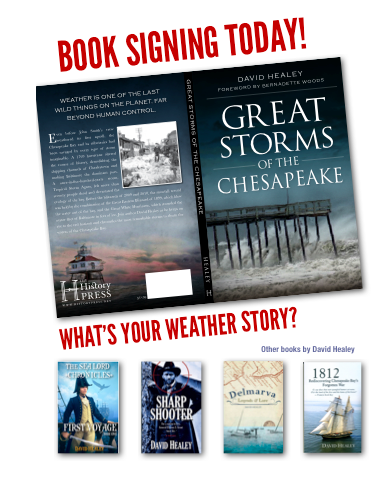
Book signing 1 pm Saturday Oct. 27 at Christiana Mall B&N

Posted in News and Events | Tagged | Leave a comment

Enter to win a copy of Great Storms of the Chesapeake!

Click on the image to go to the Great Storms of the Chesapeake Giveaway page!

If you are a Goodreads member, you can visit the site and enter to win a copy of my new book Great Storms of the Chesapeake. If you are not a member, it only takes a minute to join and it’s a great way to connect with other book lovers. Thanks and good luck!


Posted in Great Storms of the Chesapeake | Tagged , , , | Leave a comment

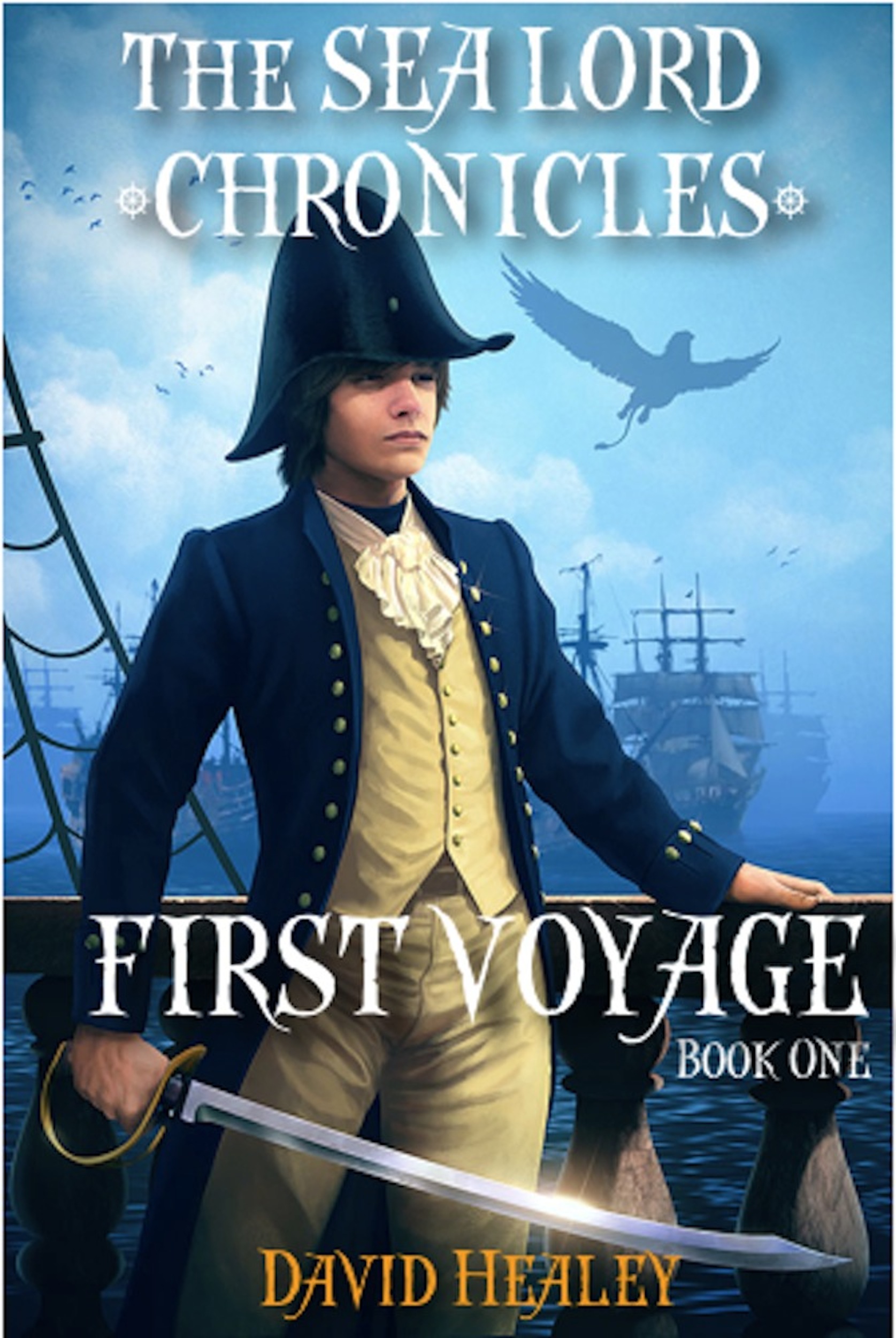
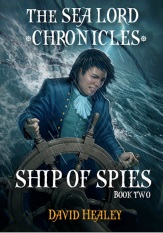
Introducing The Sea Lord Chronicles

In the never a dull moment category, here’s announcing a new project called The Sea Lord Chronicles. I’ve just finished up “First Voyage,” which is Book One of what I hope will be a series.

This is also one of the fastest books I’ve written, I think because the story was already all in my head and it was just a matter of putting down the words. The stories where one has to puzzle out “what’s next” on the page are fun to write because of that process of discovery—I didn’t know that was going to happen next!– but they go more slowly.

This is a project that combines a lot of things I love—history, the age of sail, fantasy and YA. The result is a fiction series I hope will appeal to younger teen readers as well as adults who are young at heart. There are a lot of us who read YA because it’s just so creative, inspiring and entertaining.

I’ve always loved stories that play a bit with history, whether  it’s changing the outcome of a battle, introducing magic or adding an alternative reality such as steampunk to real-life history.

For me, The Sea Lord Chronicles has been a chance to do just that—taking what’s already fun about history and spicing it up with what’s fun about the fantasy genre.

Part of the problem as a writer is that you get so close to what you’ve written that sometimes you can’t see the forest for the trees—or is that scenes for the sentences?

On that note, I’ll be asking some friends and fellow writers to take a look at the manuscript over the weeks to come in order to offer some feedback. If you are interested, be sure to let me know and I can share an advanced reading copy for your ereader of choice. 

As my sea-faring characters would say: Huzzah!

Posted in News and Events | Tagged | Leave a comment

Book signings and talks set for this fall

Have books, will travel …

It’s shaping up to be a busy fall now that “Great Storms of the Chesapeake” is out. I’ll also be doing a couple of War of 1812 talks. Please stop by and say hello at one of these upcoming events. In our ebook age, isn’t it nice to actually get a signed copy of the printed book and talk with the author face to face! There are a few more events that are coming together, so watch Facebook and Twitter for updates.

Thursday, Sept. 27, 6:30 pm, Smoke and Flames on the Sassafras talk, Historic Mount Harmon Plantation, Earleville, Md.

Sunday, Oct. 7, 7:30 am, book signing at Browseabout Books, Rebobeth Avenue, Rehobeth Beach, Del.

Thursday, Oct. 11, 7 pm, Heroes & Villains of 1812 talk, Maritime Museum, Havre de Grace, Md.

Sunday, Oct. 14, 11 am, book signing at the Old Gray Mare Gift Shoppe, Bohemia Avenue, Chesapeake City. (To be held during the town’s Harvest Festival)

Saturday, Oct. 27, 1-3 pm, book signing at Barnes & Noble, Christiana Mall, Delaware.

Saturday, Nov. 10, 3 pm, book signing at Historical Society of Cecil County, 135 E. Main St., Elkton, Md.

Monday, Dec. 17, 6:30 pm Great Storms of the Chesapeake talk, Chesapeake City Branch Library, Chesapeake City, Md.


Posted in News and Events | Leave a comment

So what’ll it be today—fact or fiction? On being a “split personality” writer

It’s very exciting to have a new book coming out. “Great Storms of the Chesapeake” has been a year in the making. (It goes on sale Sept. 18.) It is a nonfiction book based upon endless hours of research into the legendary hurricanes, blizzards, fogs and freezes of the Chesapeake Bay region.

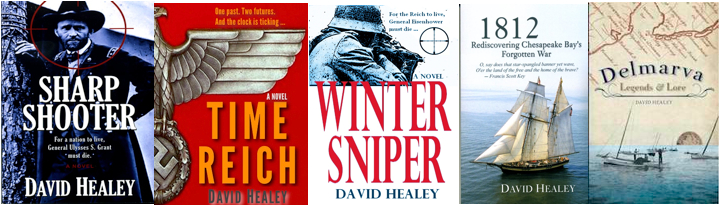
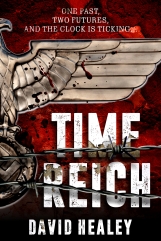
In between delving into all those snowstorms and gales, I was working on some fairly heavy duty revisions to my novel, “Time Reich.” This book took a very long and convoluted path to being published … in some ways, I’ve been working on it for twenty years. Good grief, Charlie Brown!

I was never really happy with an earlier, paperback version and so revised the book significantly for the ebook version that came out recently. I am thrilled that it has received some kind reviews on amazon.com! The book is also gaining traction in terms of sales, which means more readers are noticing “Time Reich.”

What’s been a little crazy at times has been switching gears between nonfiction and fiction. I’ve noticed this when posting to my Facebook Books & Author Page because in one post I might have an amazing photo of Hurricane Hazel chewing up a sloop, while the next post might be something from the pages of the novel.

To be sure, “Time Reich” and “Great Storms of the Chesapeake” are very, very different books. There are days when it’s a nice change of scenery to move from one to another. There are also times when it leaves me feeling a little dazed or like I have two personas—one as a writer of history books and the other as a novelist.

That’s not to say that a great deal of research didn’t also go into the novel, because I read deeply about the topic, visited Dachau and the Holocaust museum, interviewed an actual OSI war crimes researcher, and ended up with a thick folder of research materials. However, the kind of historical research one does for a novel is used differently from how it is used for a nonfiction book. One tends to weave it into the story in a way that is far more subtle. In a novel, historical research might never even bubble to the surface, but it is always there in the writer’s mind to give context and influence the actions of the characters. I suppose you might say historical novels are written out of distilled knowledge and understanding.

I have to say I’m looking forward to focusing on fiction for a while … with a little history mixed in, of course.

Posted in Writers & Writing | Tagged , , , | Leave a comment

Great Storms of the Chesapeake book cover!

Great Storms of the Chesapeake is due out in September!

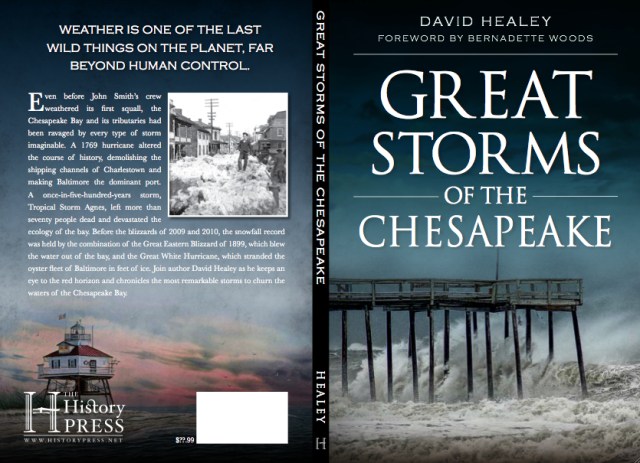
Here’s a peek at the Great Storms of the Chesapeake Book cover. Featured on the front is a storm-tossed pier, with back cover images of an ice flood from 1904 and a beautiful painting by Calvert County artist Harry Richardson of storm clouds gathering over a Chesapeake Bay screwpile lighthouse. I can’t say enough good things about the wonderful book designers and editors at the History Press. Once again, they have created something really special to accompany a unique book that tells the stories of 400 years of storms on the Chesapeake.

Posted in Great Storms of the Chesapeake | Tagged , | Leave a comment

Five rules for getting boys to read

ImageOne of my part-time jobs is working at the local library. It’s a great job for a writer in that I spend all day surrounded by books and by people who love to read. I also observe a lot of parents who are frustrated that they can’t get their boys to read—or read the books their parents want them to read.

Part of the problem is that there are lots and books for girls featuring ponies, mermaids, girl vampires and the like. These are all wonderful books if you’re a girl, but they don’t appeal much to boys. 

It’s tough out there for boy readers. The selection of books isn’t the only roadblock. Culturally, reading books isn’t something that’s much encouraged. Reading is often linked to education and “classroom performance.” I would simply point out how much richer their lives would be if they formed the habit of reading.

Here are a few tips and observations I would offer parents and their boys:

Rule Number One. Read what you want. I see so many moms and dads discourage their boys—or just plain say “no”—to graphic novels or illustrated books such as the Big Nate series or Captain Underpants. If it catches their eye, let them read it.

Rule Number Two. A “book” does not always have to be fiction. A lot of boys like the “Ripley’s Believe It or Not” books or “Star Wars” encyclopedias or the fascinating DK books on everything from Knights to Space Exploration. Nonfiction is just fine.

Rule Number Three. Ditch the Lexile scores. If you are not familiar with the Lexile score, it is an arbitrary measurement of a book’s “reading level” based on vocabulary and sentence structure. It does not take into account ideas, concepts or adventures. Teachers often have to assign books that meet a certain Lexile score. In other words, the boring books. For boy readers, reading what is dictated by the Lexile score system is a pedagogical version of the Bataan Death March. 

Rule Number Four. Set an example. Turn off the TV once in a while and have family reading night. Read the same books as your son so you can talk about them together. Make it special by serving snacks, just as you would watching TV or movies. It’s OK to read sprawled on floor. You don’t have to sit up straight. You will not ruin your eyes reading by flashlight. Whatever!

Rule Number Five. Get a library card. (Or go to a bookstore.) Get thee and thine to any locale that has books available for borrowing or purchase. Let your kid pick out what he wants to read and not what you had in mind. Libraries have it all, and the price is right. Many of us were lucky enough to grow up in houses filled with books, with the library itself being like a second home. But let me put in a plug here for bookstores, because they will have all the latest series. Ask the staff what’s hot—they all love to read. The books will be new and therefore more appealing. Skip that latte at the bookstore coffee shop, and let your boy get both books he wants.

You see, it all comes down to the fact that boys do like to read. It’s just that they might not know it yet, and it’s our job as authors and parents and readers ourselves to introduce them to one of life’s greatest joys.

 
Posted in Writers & Writing | Tagged , , | Leave a comment

The Cannons of Lewes

http://youtu.be/Ldr6d-fDoSA

This is a video that my son, Aidan, filmed while I “narrated” because the cannons at the town park caught our attention. It’s just another example of the amazing places War of 1812 history pops up!

Posted in Delmarva History, Uncategorized | Leave a comment

Watch the new Time Reich book trailer!

I love to watch movie trailers … to the point where I don’t have to go see the movies because I feel as if I’ve watched them all! Book trailers have been catching on as well, as here’s one my “team” helped create for Time Reich. I like the catchy music …

Posted in book trailers, Uncategorized | 1 Comment